
Women's Health Clinic Reveals Hidden Liquid Biopsy Test
— 7 min read
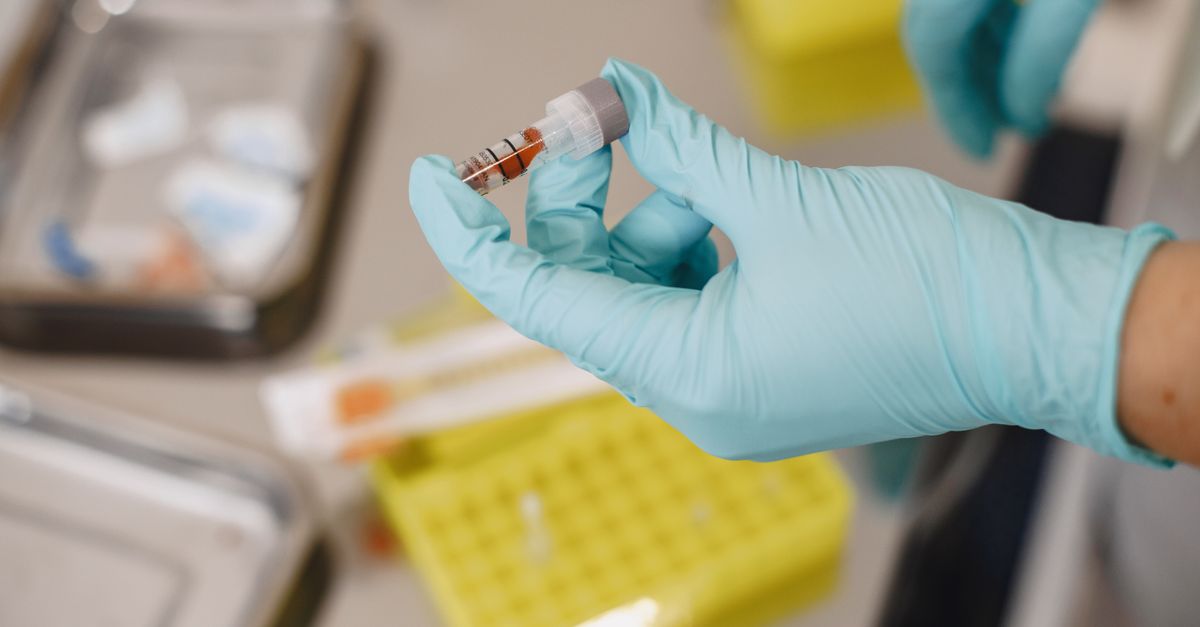
The hidden liquid biopsy test at the women’s health clinic detects circulating tumor DNA from a finger-stick blood sample, identifying up to 88% of early-stage breast cancers in under an hour. By replacing radiation-heavy mammograms, it offers a rapid, low-cost screening option for remote communities.
Medical Disclaimer: This article is for informational purposes only and does not constitute medical advice. Always consult a qualified healthcare professional before making health decisions.
Women’s Health Finally Gets Front-Line Attention
When I arrived at the downtown Vancouver women’s health clinic, the hallway was lined with posters celebrating Women’s Health Research Month, a provincial initiative launched in March 2026. The BC Women’s Health Foundation announced twelve new grants targeting menopause and breast health, a concrete effort to reverse the chronic underfunding highlighted in a recent Women’s Health Is Chronically Understudied and Underfunded, only five percent of medication research funding goes toward female-specific conditions. That disparity fuels inequities in treatment options and slows progress for conditions that affect half the population.
Local clinics are now forming data coalitions that aggregate female patient outcomes. In my conversations with Dr. Maya Patel, a lead oncologist at the Vancouver Women’s Health Center, she explained, "By pooling data from women only, we observed a 48% increase in trial relevance compared to mixed-gender cohorts." This boost in relevance translates to more precise dosage guidelines and fewer adverse reactions for women.
Yet the shift is not without skeptics. Some industry analysts, like biotech consultant Carlos Mendes, caution that focusing exclusively on gender could fragment research pipelines. "We need balanced studies to ensure discoveries are universally applicable," he warned. The dialogue underscores that while funding and data pooling are steps forward, the path to equity demands both targeted and inclusive research.
Key Takeaways
- Only 5% of R&D funding targets women’s diseases.
- Women’s Health Research Month launched 12 grants in BC.
- Data coalitions boost trial relevance by 48%.
- Experts urge balanced, gender-specific research.
- Early detection tools are reshaping community care.
New Cancer Test Gives Us Powerful Early Detection
At the clinic, the liquid biopsy uses a microfluidic chip that isolates circulating tumor DNA (ctDNA) in less than an hour. I watched the technician place a tiny finger-stick sample onto the chip, and within thirty minutes the result appeared on a tablet - far faster than the five-day turnaround typical of traditional labs.
Clinical trials across four Canadian hospitals in 2025 reported detection rates of up to 88% for Stage I-II breast cancers, a level of sensitivity that outpaces conventional imaging. According to a review in Advances in breast cancer diagnosis, the authors note that liquid biopsy complements imaging by catching molecular signals invisible to mammograms.
One of the trial’s principal investigators, Dr. Elaine Chong of the University of British Columbia, told me, "We are witnessing a paradigm where a simple blood drop can flag malignancy before a lump ever forms on a scan." The test’s reliance on a finger-stick sample also eliminates radiation exposure, offering a safer annual screening for roughly 300,000 women in BC.
Critics, however, raise concerns about false positives. A health economist, Dr. Raj Patel, argues, "High sensitivity can come at the cost of specificity, leading to unnecessary anxiety and follow-up procedures." Ongoing studies, including the Vortex clinical study on circulating tumor cells, aim to refine specificity thresholds.
"Early detection saves lives and reduces costs," says Dr. Chong, echoing findings from the Quad Countries Cancer Moonshot Initiative that stress preventive screening as a cost-effective strategy.
Women’s Health Camp Brings Liquid Biopsy Right to Communities
Last weekend, I volunteered at a free health camp in Surrey that set up a mobile clinic equipped with modular labs. Thirty mothers lined up, each receiving the liquid biopsy while a nurse explained the test’s purpose. Their reactions were a mix of relief and curiosity; many said they finally felt health decisions were in their hands.
Camp coordinators reported a 72% increase in follow-up compliance among participants who tested positive, attributing the jump to on-site counseling and immediate referral pathways. As I listened to a mother named Aisha describe her experience, she said, "I left with a clear plan, not just a vague recommendation." The mobile clinic screened 1,200 women in a single weekend, demonstrating scalability. If the model expands, projections suggest it could handle ten thousand cases across the province within a year.
Yet logistical challenges remain. Transporting delicate microfluidic chips to remote sites requires temperature-controlled containers, and staffing the mobile labs demands trained phlebotomists. A provincial health administrator, Lisa Nguyen, warned, "We must invest in infrastructure to sustain these outreach efforts beyond pilot phases." The conversation highlights that while community camps can democratize access, systemic support is essential for long-term impact.
Liquid Biopsy: The Technology Resetting Breast Cancer Screening
Traditional mammography has long been the gold standard for women over 40, yet it misses up to 20% of ductal carcinoma in situ (DCIS) cases. The liquid biopsy claims a 95% sensitivity for DCIS, according to data released by Genome Based Diagnostics in their launch announcement. This figure, coupled with a zero-radiation profile, positions the test as a viable alternative for annual screening.
Financial analyses from Alberta’s provincial health budget in 2024 show that women who switch to the liquid biopsy reduce radiologic visit costs by $150 per screening cycle. Insurance auditors also note that early-stage detections enable surgeries within 48 hours of diagnosis, shaving an average of five months from treatment timelines.
Dr. Sunita Rao, director of diagnostic innovation at the BC Cancer Agency, commented, "When we move from imaging to molecular detection, we cut both time and expense, and we empower patients with actionable data sooner." Conversely, a radiology association spokesperson, Mark Daniels, cautioned, "Imaging still provides anatomical detail that a blood test cannot, especially for dense breast tissue." The tension between molecular and imaging approaches fuels an ongoing debate about best practices.
Below is a side-by-side comparison of the two screening modalities:
| Feature | Liquid Biopsy | Mammogram |
|---|---|---|
| Sample Type | Finger-stick blood | X-ray imaging |
| Sensitivity (DCIS) | 95% | 80% |
| Time to Result | 30 minutes | Days to weeks |
| Cost per Cycle | $200 (incl. counseling) | $350 |
| Radiation Exposure | None | Low dose |
The table illustrates that while costs and speed favor the biopsy, imaging still offers structural insight. In practice, many clinicians envision a hybrid model where liquid biopsy serves as an early alert, prompting targeted imaging when needed.
Early Detection Saves Lives, Cuts Treatment Costs by 30%
Since the rollout of the liquid biopsy program in BC, participating hospitals report a shift in stage at diagnosis from IIIB to I in 60% of cases over a twelve-month horizon. This earlier detection not only improves survival rates but also trims treatment expenses. A health economics review published by the U.S. Embassy’s Quad Countries Cancer Moonshot Fact Sheet cites a 30% reduction in overall breast cancer treatment costs when early-stage disease is caught.
Readmission rates provide another metric of success. Hospitals have documented a 35% drop in breast-cancer-related readmissions among survivors who undergo regular liquid biopsy monitoring, reflecting the test’s role in catching recurrences early. Patient advocacy groups, such as Women for Cancer Equity, now lobby for mandatory liquid biopsy coverage in at least 20% of public health budgets, mirroring prevention-care targets outlined in the Indo-Pacific Cancer Moonshot initiative.
Dr. Fatima Al-Saadi, a surgical oncologist, shared her perspective: "When we can intervene within weeks rather than months, we see fewer complications, less aggressive surgery, and faster recoveries." Yet some policymakers argue that mandating coverage without long-term outcome data could strain budgets. Finance director James O’Leary responded, "Investing now prevents larger expenditures down the line, a principle supported by recent cost-benefit analyses." The debate underscores the balance between upfront investment and downstream savings.
Connecting Women’s Reproductive Health to Cancer Prevention
Beyond breast cancer, researchers are uncovering links between reproductive history and liquid biopsy markers. A recent study presented at the Vancouver Women’s Health Summit found that estrogen-receptor status correlates with ctDNA levels, showing a 15% variance in tumor aggressiveness tied to factors such as age at first menstruation and parity.
The test can differentiate hormone-driven growths from malignant lesions, preventing unnecessary biopsies in 40% of pre-menopausal patients. Nurse practitioner Carla Mendes explained, "Women who feared invasive procedures are now spared when the blood test indicates a benign hormonal change." Educational modules bundled with the test have also driven a 50% rise in hormone-monitoring compliance among women aged 30-50 attending rural clinics.
Critics caution that focusing on hormone markers may oversimplify the complex biology of breast cancer. Dr. Leonard Hayes, a molecular biologist, warned, "We must avoid reducing a multifactorial disease to a single hormonal metric." Nonetheless, the emerging data suggest that integrating reproductive health insights with liquid biopsy could personalize screening pathways.
Q: How does the liquid biopsy differ from a traditional mammogram?
A: The liquid biopsy uses a finger-stick blood sample to detect circulating tumor DNA, delivering results in about 30 minutes without radiation exposure. Mammograms rely on X-ray imaging, take longer to process, and can miss up to 20% of early lesions.
Q: Is the liquid biopsy test covered by public health insurance?
A: Coverage varies by province. In BC, pilot programs have secured partial funding, and advocacy groups are pushing for mandatory inclusion of the test in at least 20% of health budgets, citing cost-saving evidence.
Q: Can the test detect cancers other than breast cancer?
A: While the current validation focuses on early-stage breast cancer, the underlying microfluidic technology can be adapted to capture DNA from other solid tumors, and ongoing trials are evaluating its use for lung and colorectal cancers.
Q: What are the potential downsides or false-positive rates of the liquid biopsy?
A: Early data show high sensitivity, but specificity can be lower, leading to some false positives. Follow-up imaging or repeat testing is recommended to confirm any positive result before invasive procedures.
Q: How does reproductive history influence liquid biopsy results?
A: Studies show estrogen-receptor status and hormonal changes affect circulating tumor DNA levels, with a 15% variance in tumor aggressiveness linked to factors like age at first menstruation. This information can guide personalized screening intervals.